The platform decision, not the framework decision
Partner
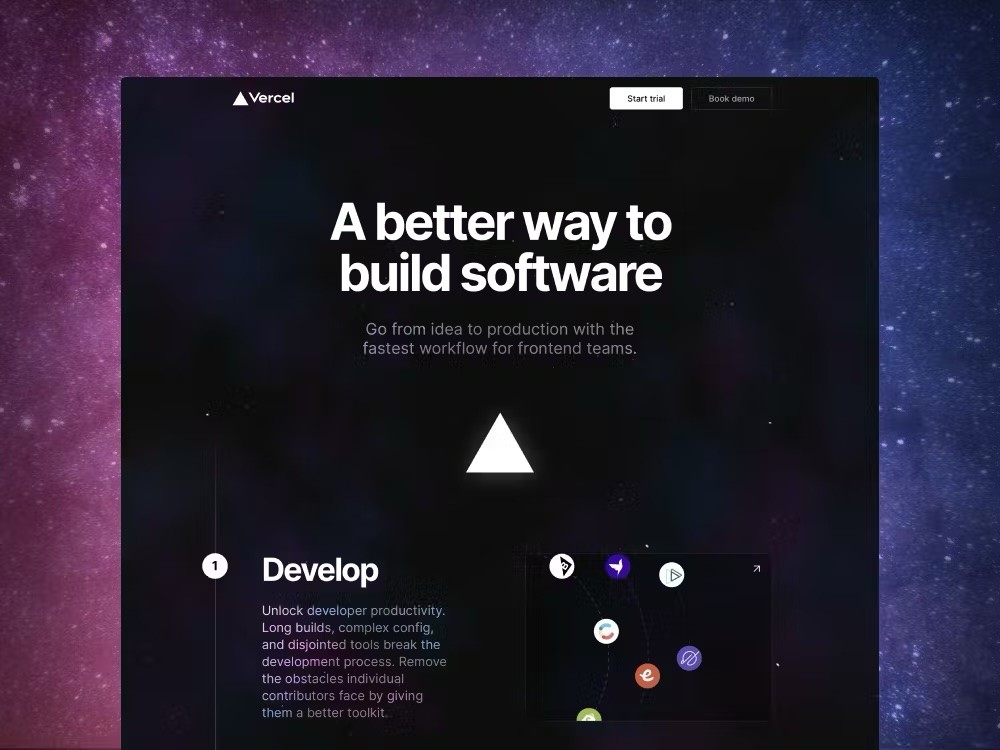
Vercel is a hosting decision, not a framework decision. It runs Next.js best because the same company builds both, but it deploys Astro, Svelte, and plain static output just as easily. What you actually get is preview deployments for every branch, an edge network with no configuration, and infrastructure that scales without a platform team to run it.
We have deployed on Vercel since its Zeit days and hold the Vercel Partner listing at vercel.com/experts/monogram. Our own AI work routes model traffic through the Vercel AI Gateway, and the deployment underneath most of the case studies on this site, whatever framework they use, is Vercel.
Visit Partner Site
Why
The parts of the platform that actually matter
- Preview deployments change how work gets reviewed
Every pull request gets a real, running URL, not a screenshot or a description. Whoever needs to sign off, a client, a PM, a designer, clicks a link and uses the actual application. That collapses a review cycle that used to take days into one conversation.
- The edge network needs no configuration
Deploys land close to whoever is requesting them without a routing rule to write or a region to pick. That is table stakes for a hosting platform in 2026, but it used to be a project of its own, and plenty of stacks still make you own it.
- AI infrastructure lives here now too
Vercel is not just where we deploy sites anymore. We route model traffic for our own AI work through the Vercel AI Gateway, which is how a single deployment reaches Anthropic, OpenAI, and Google models with one set of credentials and one place to watch spend. The platform grew up around the workload.
- It is not free once you scale
Function invocations, bandwidth, and image optimization all meter, and a viral moment or a scraping bot can produce a bill nobody modeled. High-traffic sites need a real cost projection before launch, not after the first invoice. We build that projection in during the strategy phase, not after.
- Framework agnostic, but tuned for one
It deploys Astro, Svelte, plain static builds, and anything else with a build command, but the deepest integration, image handling, caching primitives, the App Router's own conventions, still assumes Next.js. Pick the pairing on purpose instead of by default.
- Zero-config CI/CD replaces a pipeline
Push to a branch and the build, preview, and rollback are already there, no YAML to maintain unless you want to add checks on top. Teams that migrate off a hand-rolled pipeline usually find they were maintaining glue code that added no product value at all.