Metadata
Sector
- Education
Scope
- UI/UX Design
- Front-End Development
- Back-End Development
Technologies
- Next.js
- DatoCMS
- Tailwind CSS
- Vercel
- TypeScript
Stanford University
A Foundation Built to Last
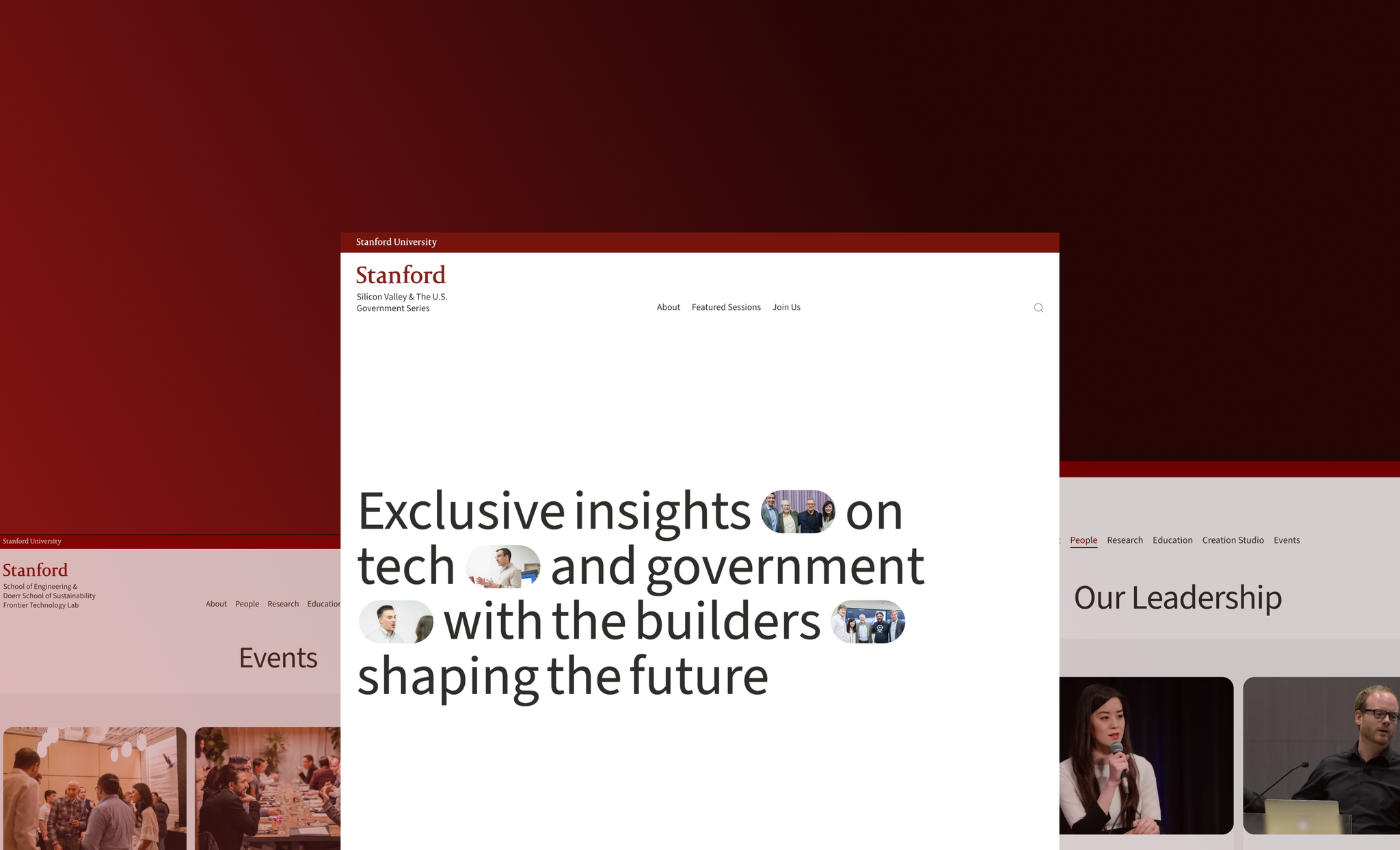
Monogram's partnership with Stanford began with a shared commitment to digital excellence. By building on a modern stack with Next.js, DatoCMS, and Vercel we gave Stanford's teams a cohesive, scalable platform capable of growing with the institution. This wasn't a reskin, it was a foundational shift in how the university publishes, manages, and presents its work online. Next.js's hybrid rendering architecture intelligently blends static speed with dynamic content, delivering near-instant load times even during high-traffic surges. DatoCMS's visual builder and modular content models put real power in the hands of Stanford's editorial teams, letting marketers and editors build complex, on-brand layouts, publish events, and iterate on pages with full autonomy and zero code required.


FTL
The Frontier Technology Lab microsite needed to hold a lot. Research, education, a creative studio, and an innovation mission without feeling fragmented. A component-based design system brought it all together, replacing a static, disconnected legacy site with a fluid, sophisticated destination that reflects the lab's ambitions at the intersection of technology and real-world impact.
SVUSG
The Silicon Valley & The U.S. Government Series demanded a platform as intellectually sharp as its programming. Applying the same proven stack, Monogram delivered a fast, authoritative microsite where speaker profiles, policy discussions, and event announcements are all editor-managed. Built to perform whether it's accessed from a campus office or Capitol Hill.

Shared Roots, Distinct Branches
Though FTL and SVUSG serve different corners of the Stanford ecosystem, both microsites were built from a shared component architecture, design tokens, and deployment pipeline. This allowed Monogram to move efficiently without sacrificing craft and gives Stanford's teams a simplified maintenance story, where updates to shared infrastructure propagate cleanly across both properties.