Metadata
Sector
- Healthcare
- SaaS
Scope
- Design
- Front End Development
- Back-End Development
- Personalization
- API Integration
- SEO & Structured Data
- Agent Discovery Surfaces
Technologies
Planet DDS
Planet DDS builds cloud-based software that helps dental practices run, including Denticon for practice management, Cloud 9 for orthodontics, and Apteryx for imaging. Its customers range from single-location orthodontic offices to dental service organizations with hundreds of locations, and each of those buyers comes to the website looking for something different.
Serving every one of those buyers the same static pages meant someone's question always went unanswered. Planet DDS needed a site that could tell who it was talking to and lead with what that visitor actually came for. Monogram designed and built a new marketing website that recognizes each visitor's audience and adapts its content to match, all managed by the Planet DDS marketing team.
Personalized for Every Audience
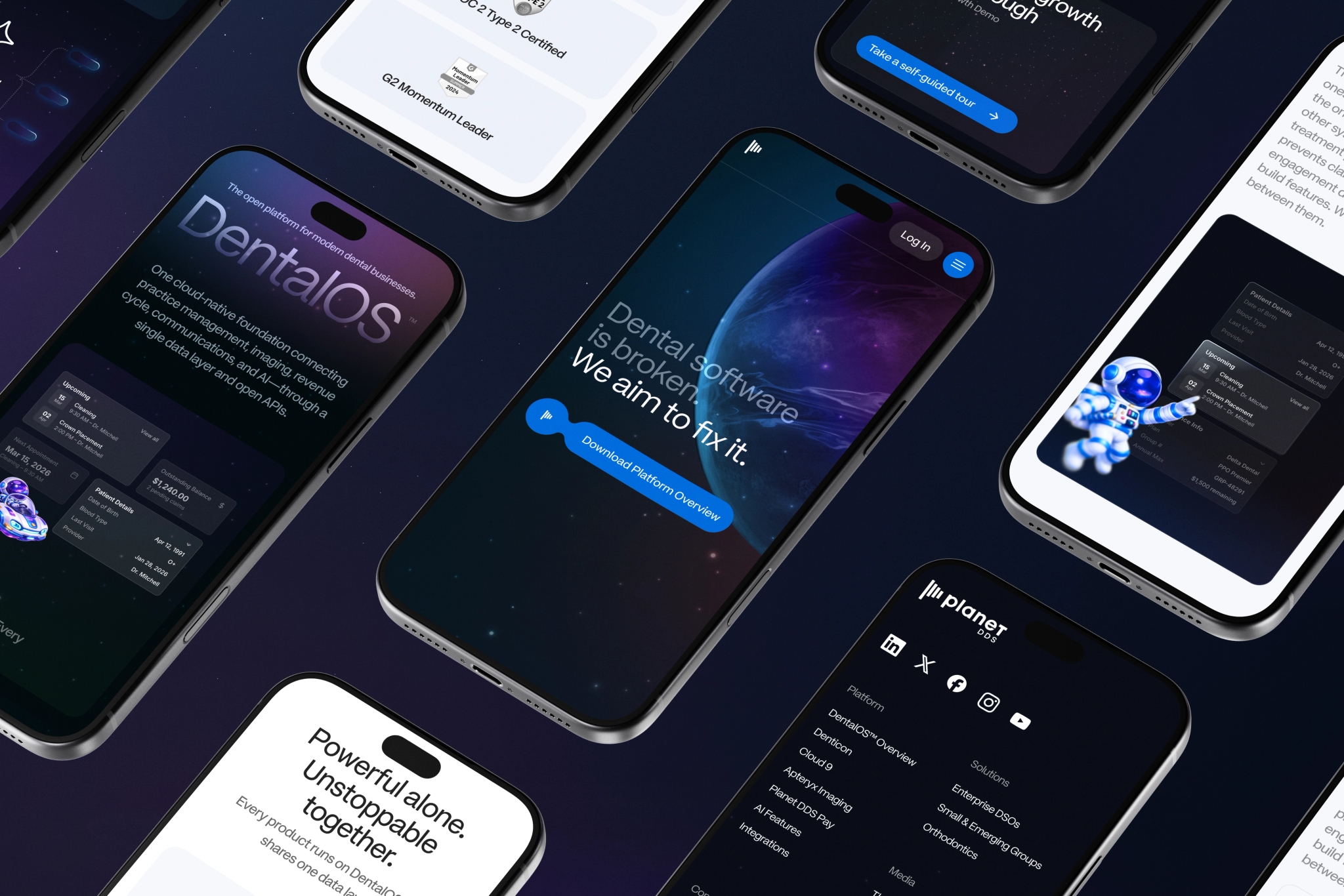
When everyone gets the same set of pages, each visitor has to dig for the part that applies to them. We wanted the site to do that work instead, recognizing who each visitor is and putting the content that matters to them front and center. Working with Planet DDS, we identified current Denticon customers, current Cloud 9 customers, orthodontic practices exploring Planet DDS for the first time, large DSOs, and smaller commercial groups as the five audiences that matter most to the business. Shared sections cover what's true for everyone, and wherever it matters, an audience can get its own messaging, imagery, proof points and calls to action. That way a current customer sees what's new and how to get more from the product they already use, while a prospect sees why they should switch.
The site works out who a visitor is from signals they're already sending. Someone who clicks an orthodontics ad or a LinkedIn campaign aimed at enterprise groups lands on a site already tuned to that message. When a visitor's company is already a Planet DDS customer, the site recognizes it and shows them the current-customer experience. Forms are still managed in HubSpot but are now styled to match the site. Once someone submits one, the site looks them up in HubSpot to learn which product they use, their specialty and how many locations they run, then tailors every future visit to match.
Not every signal is equally reliable, so they're ranked. What Planet DDS knows from its own CRM takes priority over a guess based on an ad click, and visitors with no signal at all still get a strong default experience.
A Design System Built Around Space
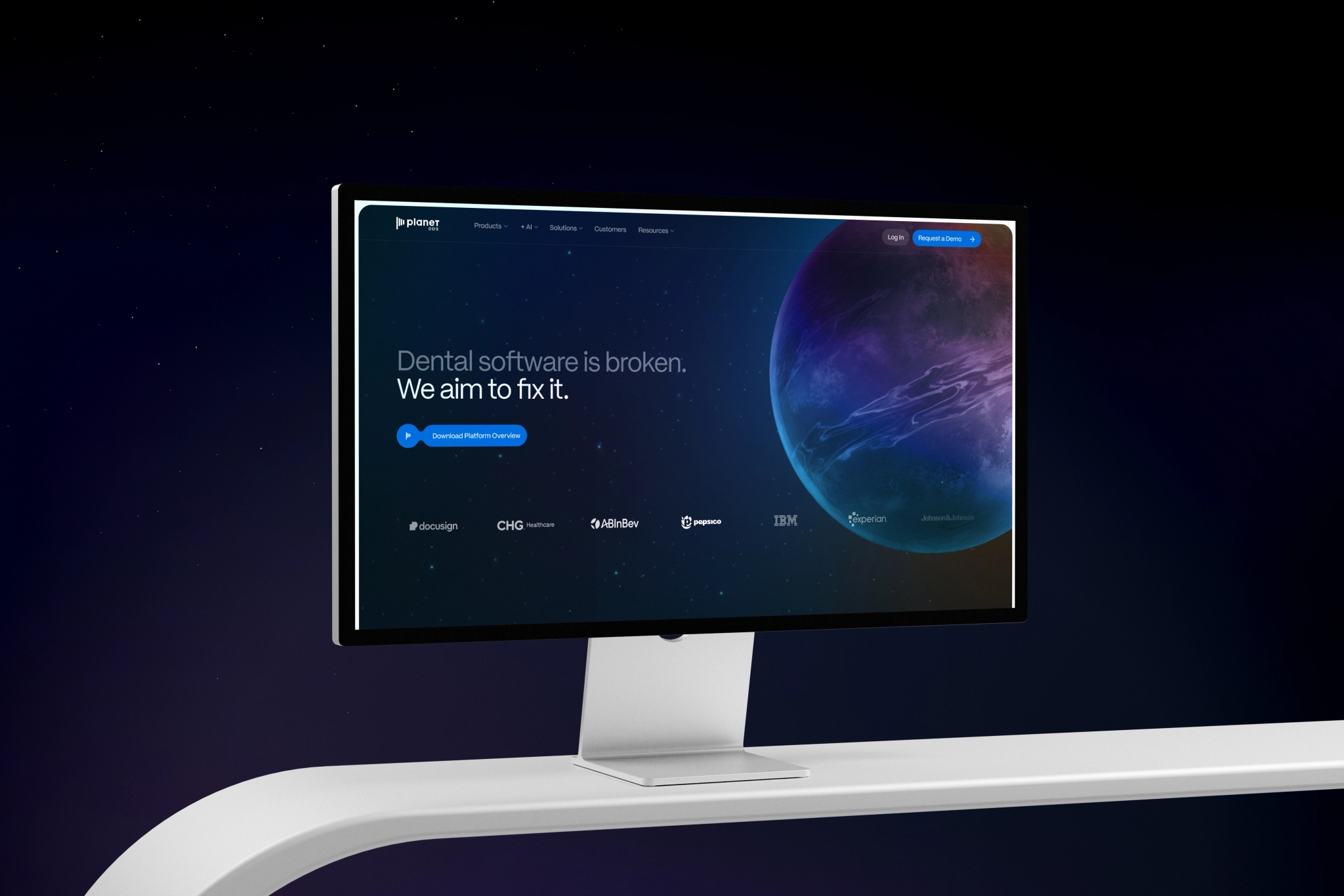
Monogram designed the site's visual system in Figma around a space theme that fits the Planet DDS name. Dark starfield sections carry the heroes and key product features, while lighter sections hold testimonials and customer stats. Consistent headlines and calls to action tie the two together.
Planet DDS wanted range, so the system was designed for variation. Sections come in multiple layouts and themes. The brand's existing astronaut mascot was also worked in as a recurring character, appearing across sections with its own animations.
The section builder was built directly from that Figma system. Each of its 21 sections and 63 variants started life in the Figma file, so marketing is assembling pages from pieces that were already designed to work together, and new campaigns look like they belong on the site from day one.
Bringing the Brand to Life
Motion carries much of the site's personality. In the homepage hero, the astronaut rides a rocket past a planet as the page loads, introducing the space theme right away. Further down, the astronaut drifts into view as if suspended in space, while the cards beside it fade into place as visitors scroll. The same treatment carries across the rest of the site, with sections animating in as visitors reach them.
Monogram built the motion with CSS scroll-driven animations and the Intersection Observer API, so sections animate in as they enter the viewport. Relying on native browser features keeps the movement smooth and the pages light.
Every animation also respects the visitor's reduced-motion preference. When that setting is on, the site shows a designed static alternative, so the experience stays polished for everyone.
A CMS Marketing Can Own
Personalization only pays off if the marketing team can create and manage audience-specific content on their own. We set up Contentful Personalization across the site so the team can create an alternate version of almost any section for each audience, preview how a page looks to them, and publish without needing engineering.
Underneath that sits a custom page builder with 21 sections and 63 variants, including heroes, feature grids, comparisons, timelines, testimonials, carousels and more. The team combines them to build new pages for campaigns. Blog posts, podcasts, case studies and other resources live in a hub that visitors can browse by type or topic. To keep the builder easy to work with, we also built an internal showcase page that shows every section and its variants in one place. Editors can see exactly how each option looks with real content and test different configurations before adding one to a page, so planning a new page or campaign takes less trial and error in the CMS.
Built for People and AI
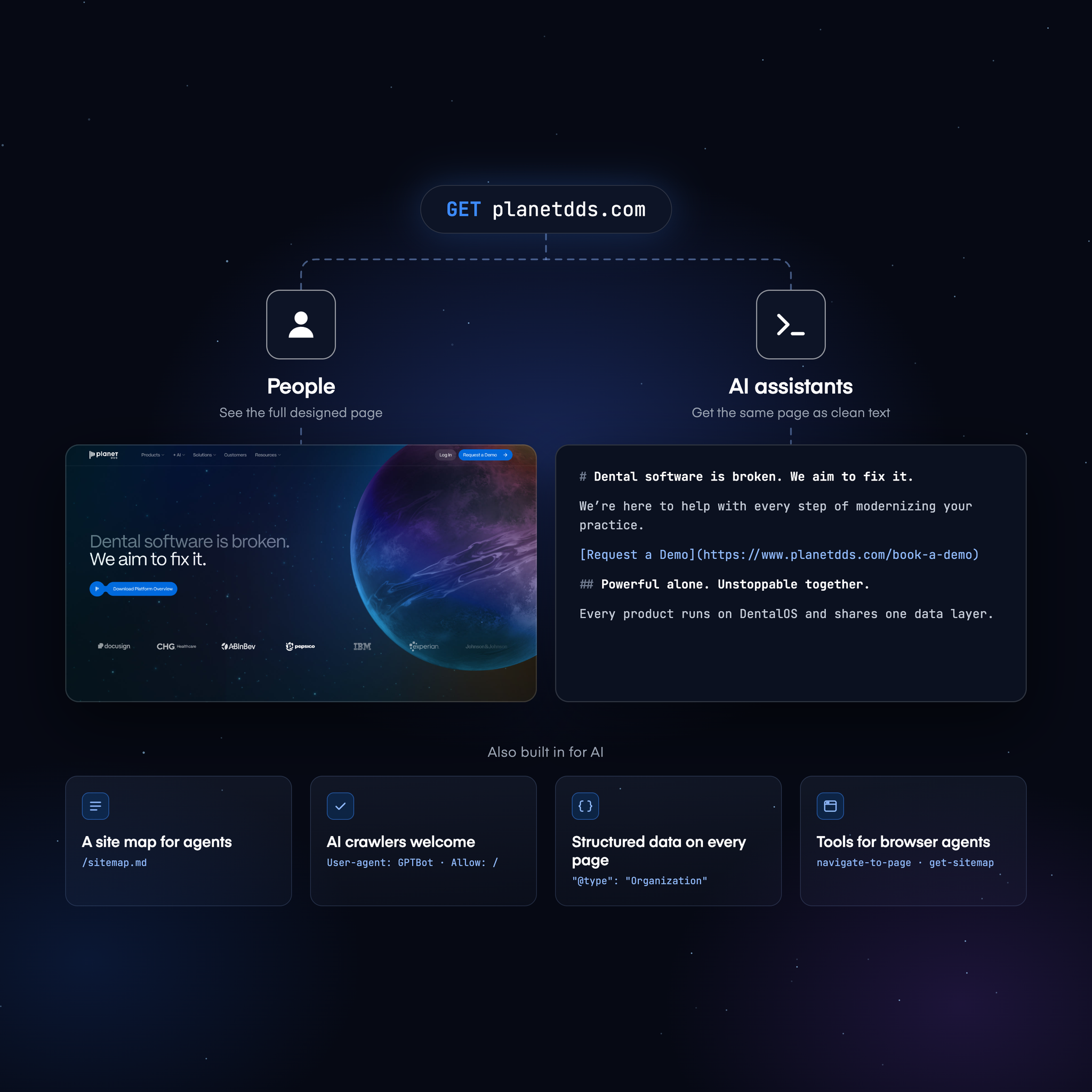
Many visitors now start their research with an AI assistant. Monogram built the Planet DDS site so those assistants can read it as easily as people do, which helps accurate information about Planet DDS and its products make it into their answers.
Every page and article is also published in a clean, text-only format that AI assistants and agents can parse without the layout code around it. A dedicated site map points agents to that content, and the site's crawler rules explicitly allow AI bots. In-browser agents also get simple tools for reading and navigating pages.
Each page also carries structured data that tells search engines and AI models what it's about. Search settings live in the CMS, so marketing can tune how every page appears, helping Planet DDS show up clearly in traditional results as well as AI-generated answers.
What We Delivered
Monogram delivered a complete marketing platform for Planet DDS, from the Figma design system through a Next.js site built on Contentful, with personalization powered by Contentful Personalization and HubSpot. The site recognizes five key audiences from ad campaigns, company data and CRM records. Marketing gets a section builder with 21 sections and 63 variants, plus a resource hub for blog posts, podcasts, case studies and more. Behind the scenes, AI-readable versions of every page and structured data help Planet DDS show up clearly in search and AI-generated answers.
The result is a site built to recognize who it's talking to and show each visitor what matters to them.