Metadata
Sector
- Insurance
Scope
- Front End Development
- Back-End Development
- API Integration
- Content Migration
Newfront ABD Portal
Clinical trial insurance requirements vary by country and change frequently. For life sciences teams, keeping that information current is essential, especially when certificates and coverage requirements are needed under tight deadlines.
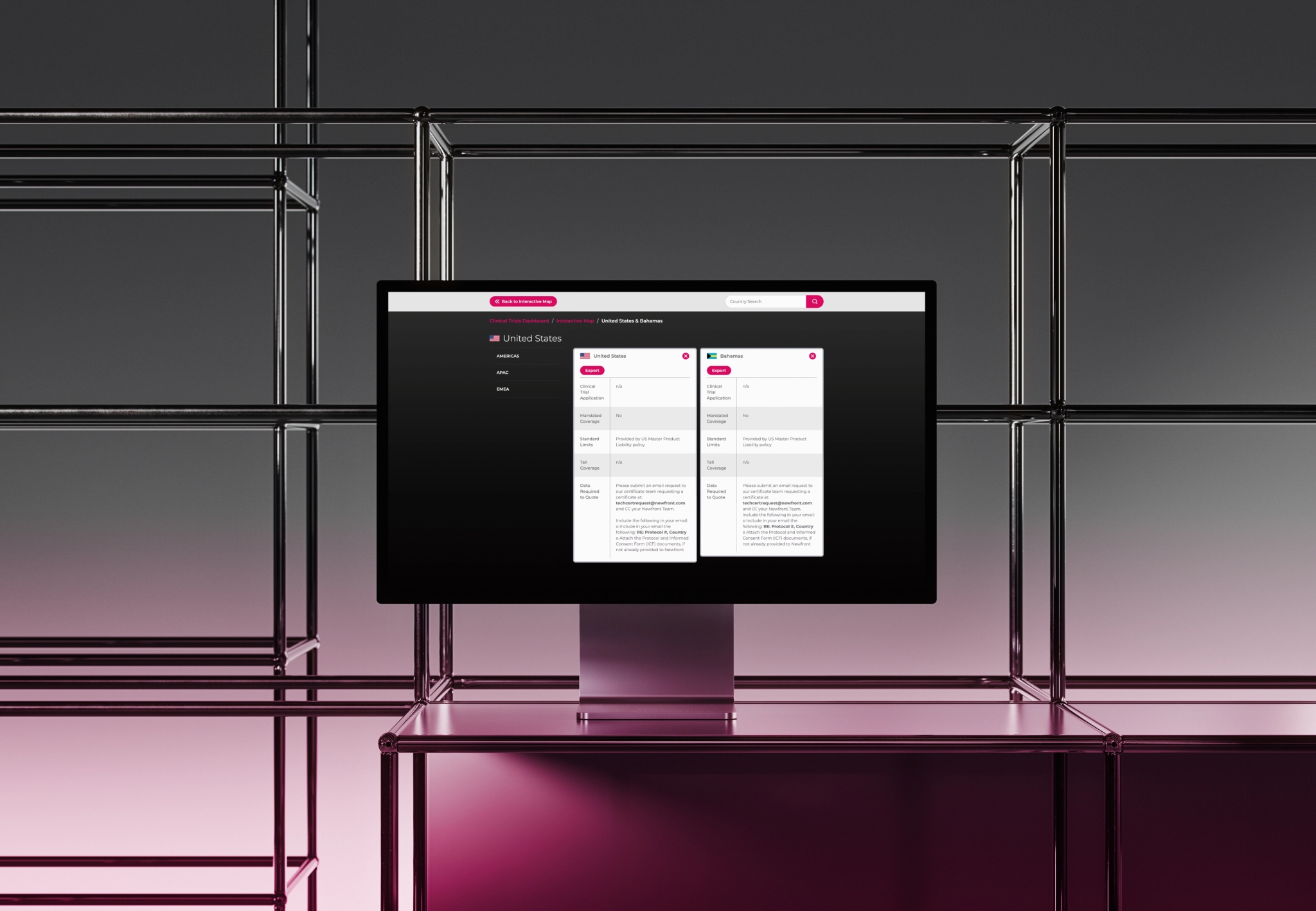
Newfront's ABD Portal gives users a single place to explore clinical trial insurance requirements across 130 countries, compare country-specific coverage information, and request a quote.
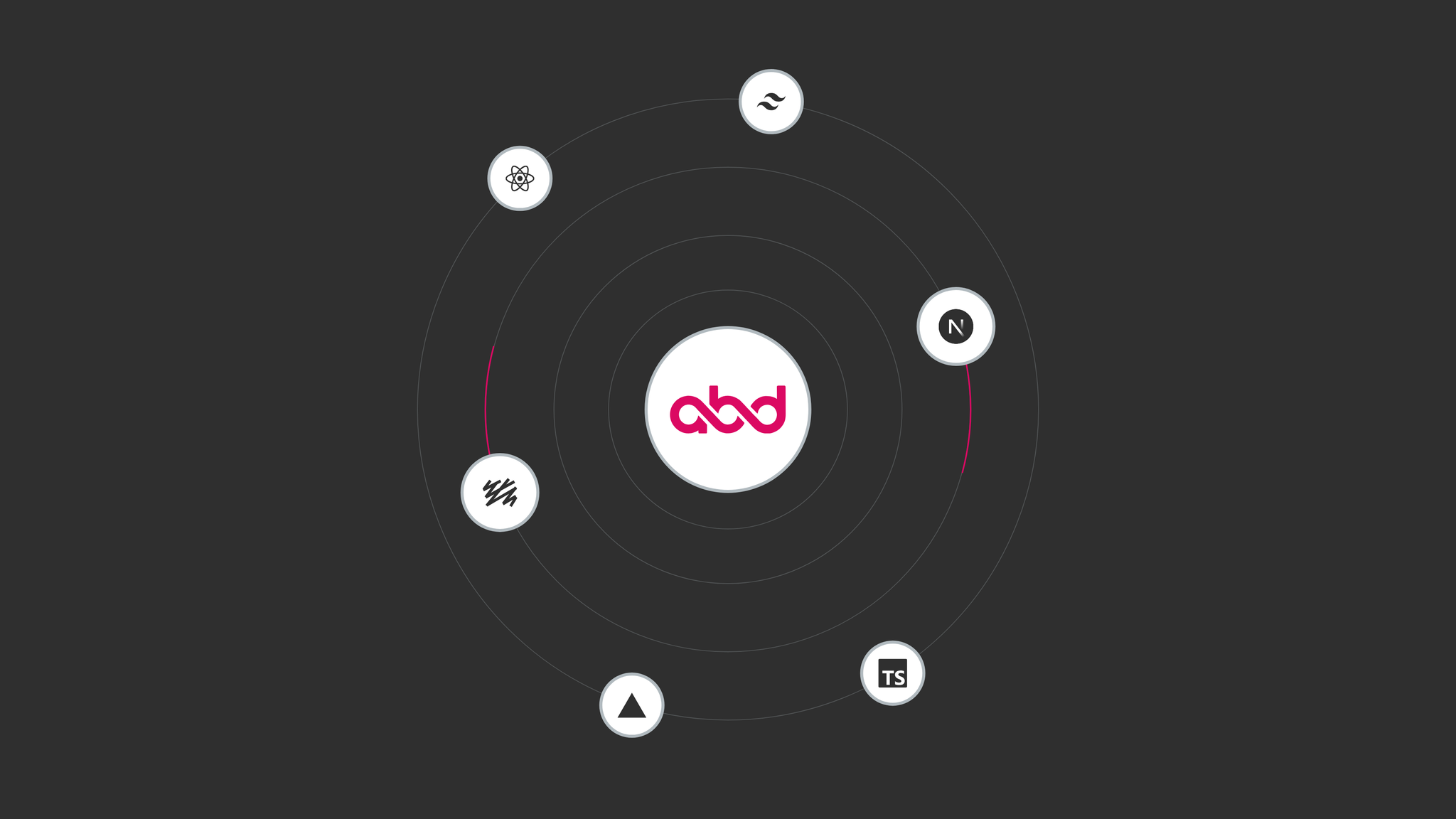
Monogram rebuilt the ABD Portal from the ground up, replacing its legacy application and content infrastructure with Next.js, Sanity, and Vercel. The new architecture separates content management from the portal application, automatically publishes content changes through a revalidation webhook, and provides a faster experience for users.
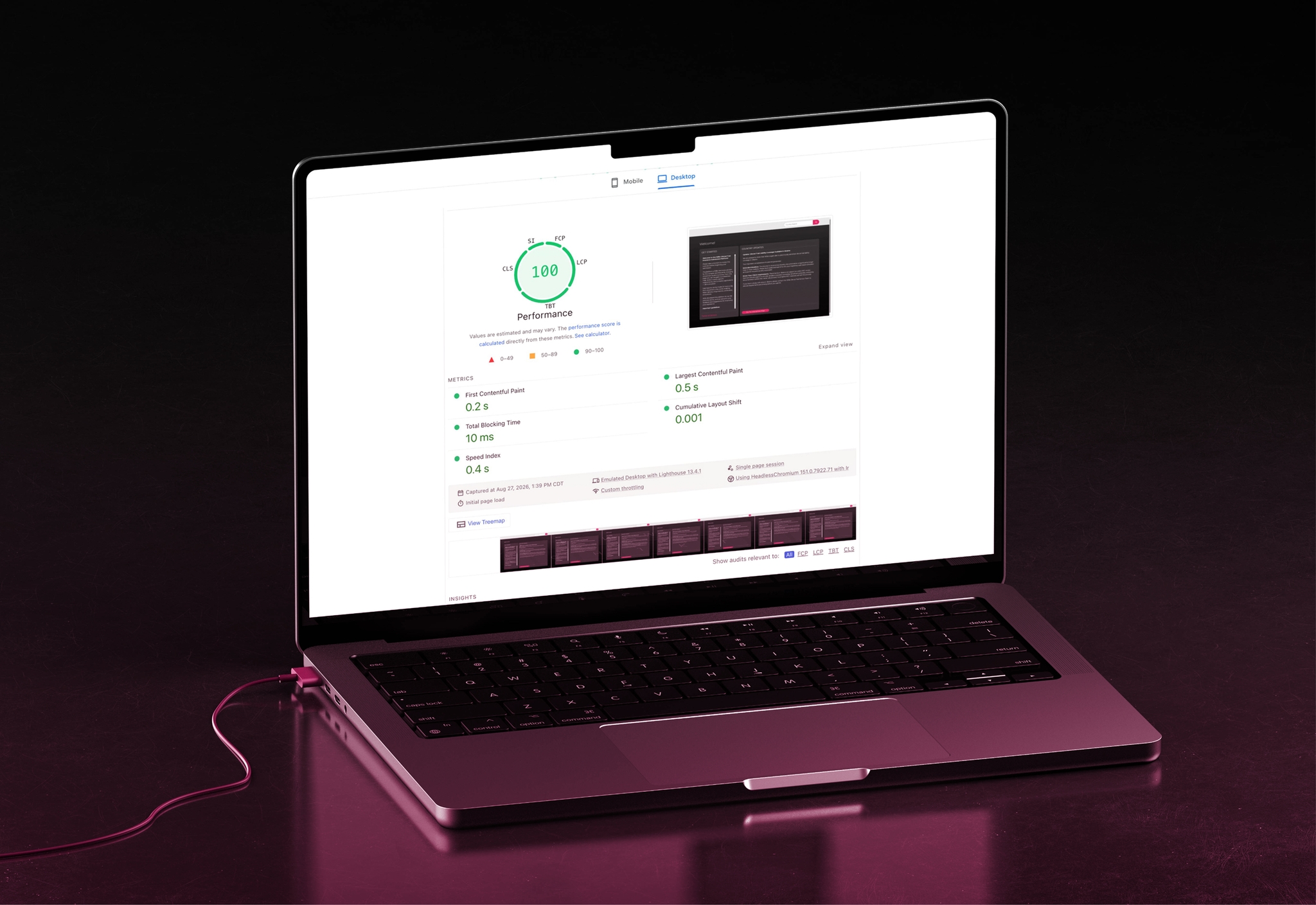
The rebuilt platform now consistently scores in the high 90s to 100 on Google PageSpeed Insights across Performance, Accessibility, Best Practices, and SEO. First Contentful Paint is under 0.2 seconds, while Largest Contentful Paint is 0.5 seconds on desktop.
Separating Content Management from the Portal Application
The ABD Portal's country requirements, Clinical Trials Dashboard, and Terms of Service content originally lived inside the same authenticated environment as the portal application. Updating content therefore required logging into the platform itself. Monogram moved this content into Sanity, creating a dedicated CMS that operates separately from the ABD Portal.
Sanity now manages the portal's structured content, including country requirements, dashboard content, and site copy. When the Newfront team publishes an update, a revalidation webhook automatically makes the change available on the live portal without requiring a manual application deployment. This separation also removes the need for the portal to maintain its own authentication layer simply to support content editing.
The resulting architecture gives Newfront two independent systems with clear responsibilities:
- Sanity manages the portal's content.
- Next.js manages the application experience.
Because the two layers are decoupled, Newfront can update insurance requirements and other portal content without modifying application code, while the application can evolve independently of the content management system. Clinical trial insurance requirements change frequently. Separating content from application infrastructure means Newfront's team can respond to those changes directly through the CMS instead of relying on engineering changes inside the portal.
Migrating 3 Regions, 7 Sub-Regions, and 130 Countries into Sanity
Moving the content model to Sanity also required migrating the existing information from the legacy system. The migration covered:
- 3 regions
- 7 sub-regions
- 130 countries
- Clinical Trials Dashboard content
- Terms of Service content
Monogram used a combination of scripting and manual entry to move the legacy content into Sanity's structured schemas. The migration was completed through a single cutover, rather than maintaining the legacy and new systems in parallel.
Country requirements are now organized within Sanity's structured content hierarchy, from regions and sub-regions down to individual country requirements. This gives the Newfront team a centralized content model that can be maintained independently from the portal's frontend.
The migration was not simply a transfer of text from one CMS to another. The country's insurance requirements became structured content that could be reused consistently throughout the application. That same content now powers the country's requirements tables, interactive map, comparison views, and CSV exports.
A Next.js and Vercel Architecture for a Faster, More Reliable Portal
The legacy ABD Portal ran on a general-purpose server environment that was slow to load and required ongoing manual infrastructure maintenance.
Monogram rebuilt the application in Next.js and deployed it on Vercel, replacing the self-managed server infrastructure. Vercel now handles the portal's hosting, scaling, and global delivery, while Next.js provides the application framework for the rebuilt frontend. The migration also changed how content updates reach production. A change published in Sanity triggers the revalidation webhook, allowing the updated content to appear on the live portal without requiring a manual redeployment.
The new architecture has produced strong measured performance:
- Google PageSpeed Insights scores consistently fall in the high 90s to 100 across Performance, Accessibility, Best Practices, and SEO.
- First Contentful Paint is 0.2 seconds.
- Largest Contentful Paint is 0.5 seconds.
The platform no longer depends on manually maintained application infrastructure for either hosting or routine content publishing. Newfront can keep country requirements current while Vercel handles the infrastructure required to deliver the portal.
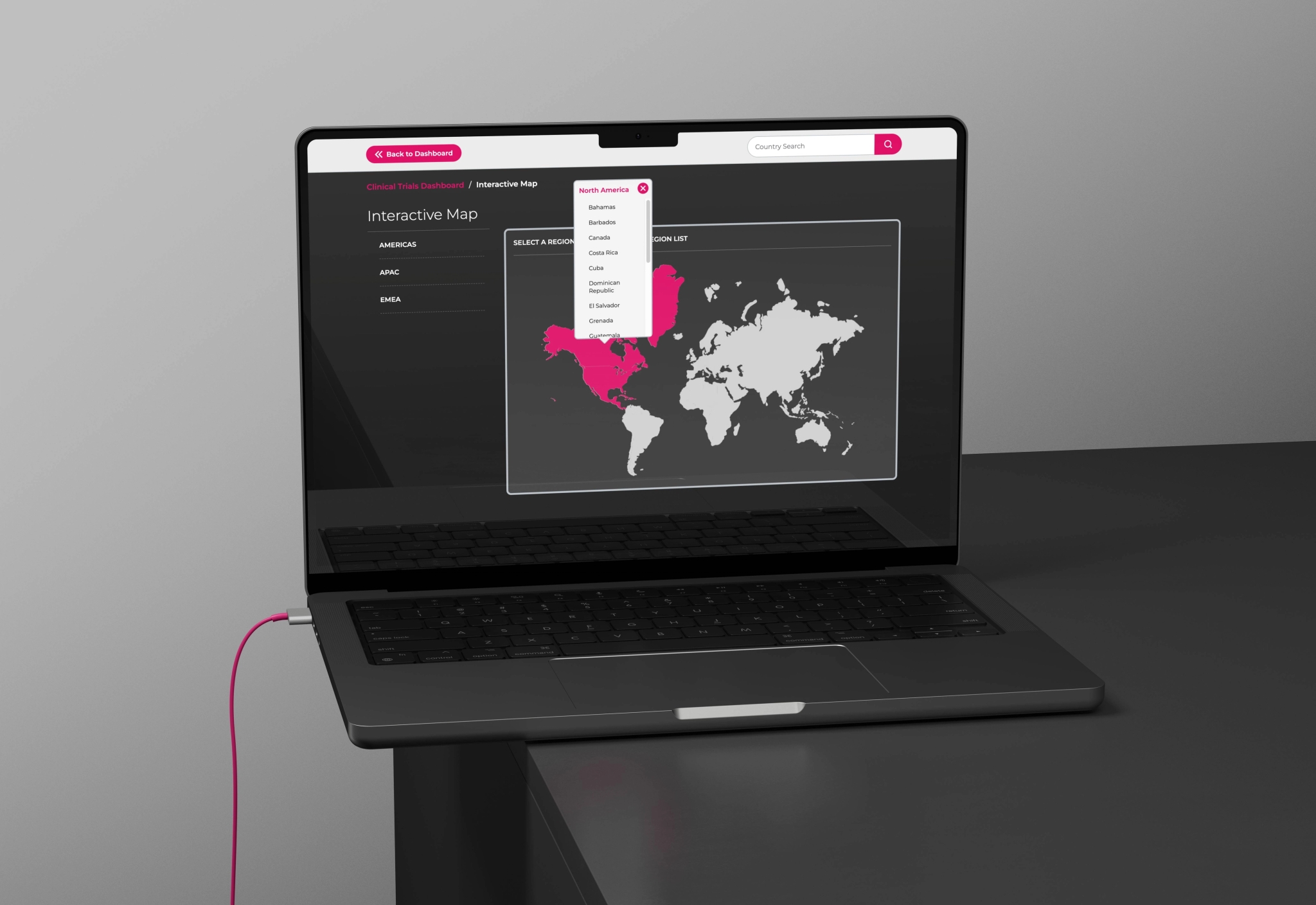
Rebuilding the Interactive Country Map in Next.js
The ABD Portal's interactive map is one of its primary ways of presenting country-specific insurance information.
In the legacy system, country data lived in the application's database, while region selection relied on custom JavaScript. The map was therefore tied closely to the same infrastructure that supported the rest of the aging portal.
Monogram rebuilt the map and comparison experience in Next.js, preserving the existing visual design and interaction pattern while replacing the underlying implementation. The rebuilt experience uses the browser's native Popover API for region selection rather than the legacy custom JavaScript implementation.
Country information now comes directly from Sanity. This means the map, country comparison view, and other parts of the portal use the same structured content managed by the Newfront team. When a country's insurance requirements change in Sanity, the updated information can flow to the map and comparison experience without a code change.
The interactive map is no longer a separate data system. It is another presentation layer for the same structured country content managed in Sanity. That reduces the risk of maintaining multiple versions of country requirements and gives Newfront a single place to keep this information current.
CSV Exports Use the Same Source as the Country Tables
Users often need to take country requirements outside the ABD Portal for internal review, sharing, or record keeping.
Monogram added a CSV export that generates files directly from the same country content displayed in the portal's tables. The export reads from Sanity, rather than maintaining a separate dataset. As a result, the data shown in the country tables and the data included in downloaded CSV files originate from the same content source. When Newfront updates a country's requirements in Sanity and the change is published through the revalidation workflow, that updated content is reflected in both the portal and its exports.
Using one source for both the user interface and CSV generation reduces the possibility that downloaded information will diverge from the requirements users see on the portal. For a platform where country-specific insurance information can change frequently, keeping these representations synchronized is essential.
Results: A Faster Portal with an Independent Content Workflow
Monogram rebuilt Newfront's ABD Portal around Next.js, Sanity, and Vercel, replacing the legacy application and its login-gated content management workflow.
The new platform now provides:
- Insurance requirements across 130 countries
- Content organized across 3 regions and 7 sub-regions
- A dedicated Sanity CMS separate from the portal application
- Automatic publishing through a Sanity revalidation webhook
- A Next.js implementation of the interactive country map
- Region selection using the browser's native Popover API
- CSV exports generated from the same Sanity content used by the portal
- PageSpeed Insights scores in the high 90s to 100
- First Contentful Paint is 0.2 seconds
- Largest Contentful Paint is 0.5 seconds
- Hosting and global delivery through Vercel
The architectural change gives Newfront a faster portal and a simpler way to keep the information behind it current. For a platform built around country-specific clinical trial insurance requirements, that separation matters. The team responsible for the information can maintain it directly, while the application remains free to evolve as a separate technical system.