We reach for Supabase when Postgres needs realtime
Technology
Supabase is Postgres with the parts you would otherwise build yourself already attached: realtime subscriptions, auth, storage, and row level security inside one project. That combination earns its place on a specific kind of product, an application with live state that a team sits and watches. It earns much less on a marketing site.
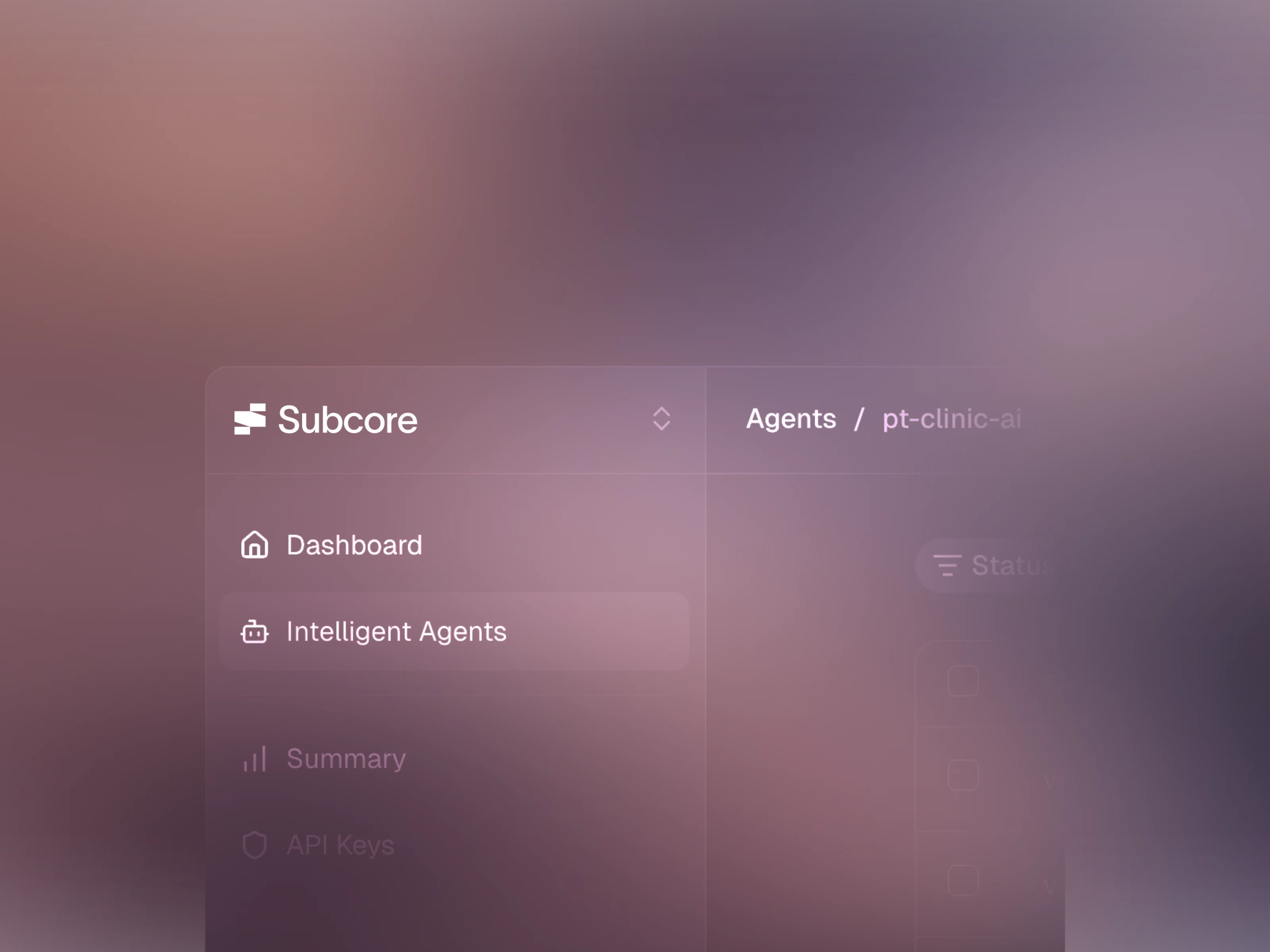
We have shipped it once, on Subcore, a full stack observability platform for teams running AI agents in production. That build is the honest extent of our Supabase work, and it is the shape of problem we would pick it for again.

Where
What Supabase earned on the one build we shipped
- Realtime, without writing a socket layer
Subcore operators need to see agent events as they land, not after a refresh. Supabase Realtime pushes updates to the dashboard the moment a new event arrives or a summary is generated, and a layered provider architecture keeps that live data flowing to every client without a full page reload.
- Analytics belong in the database
Conversation volume, average session length, escalation rates, peak hours, and category breakdowns are computed by Supabase RPCs instead of assembled in application code. Aggregation is the thing Postgres is genuinely good at. Pushing it down keeps the dashboard thin and keeps every number consistent across views.
- One project, so read this narrowly
We have built on Supabase once. It won the spot on Subcore because that product needed Postgres, live updates, and heavy aggregation in one place. For a content driven marketing site we would still reach for a headless CMS and a managed database, and we would tell you that up front.
One build is not a practice area, and we are not going to write it up as one. What Subcore proved is narrow: when a team sits and watches live state, Supabase Realtime and Postgres RPCs remove two systems you would otherwise write and maintain yourself.
Everything else about that product still had to be designed. The event model covering the full agent lifecycle, the grouping of events into sessions, the escalation and handback flow, the analytics worth computing at all. Supabase made those cheaper to build. It did not decide any of them.
If your product has live state and real aggregation, this is the shape we would reach for again. Two weeks to a build plan. Start a conversation.