A checkout engine is not a content system
Partner
BigCommerce is the commerce backend: catalog, checkout, order management, payment gateway connections. It is not a content or design system, and treating it as one is how BigCommerce sites end up looking and behaving like every other BigCommerce site.
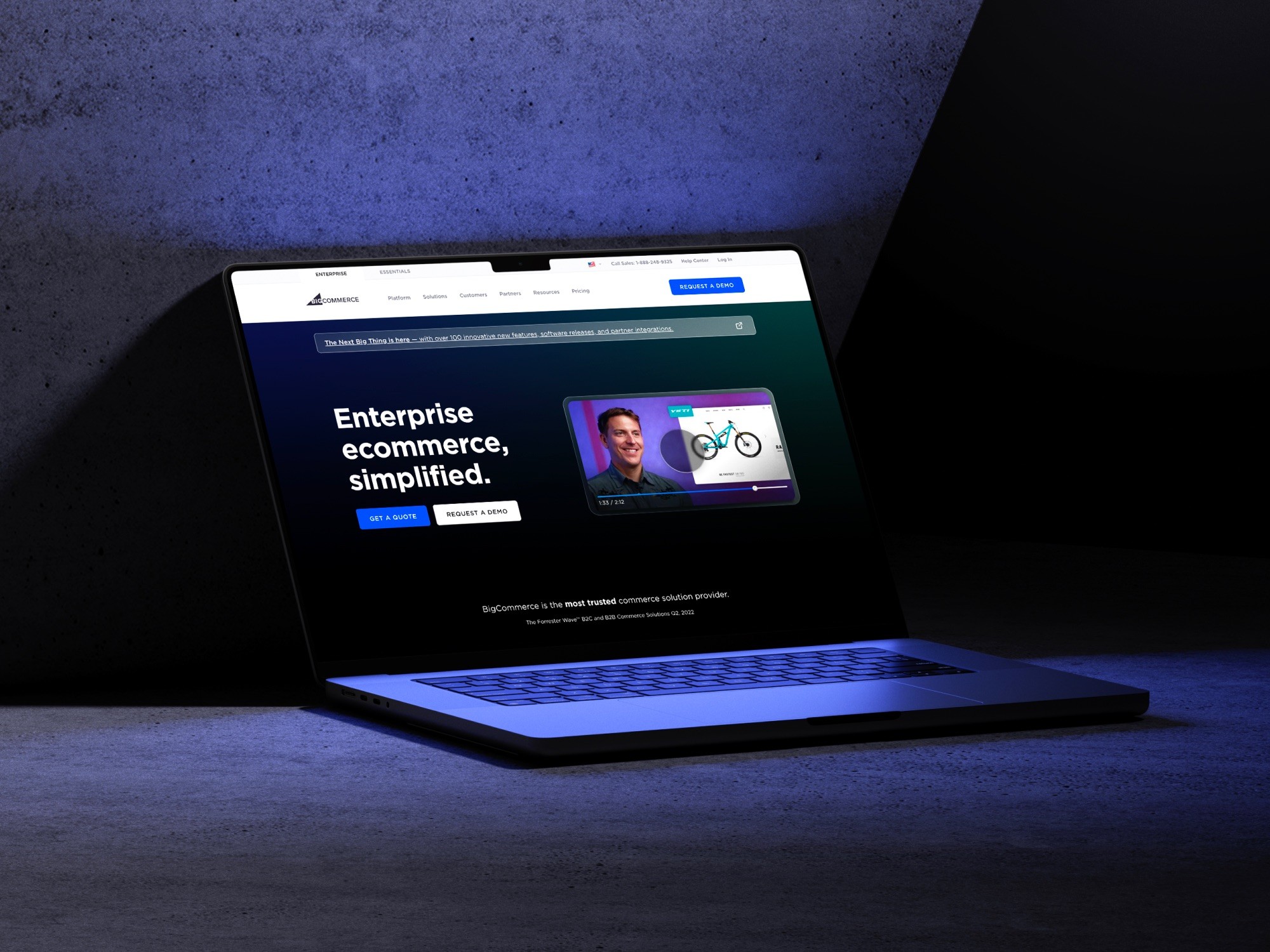
We put a headless front end in front of it. On BigCommerce's own marketing site, we paired Contentful for content with Makeswift's visual builder and a Next.js front end on Vercel, migrating tens of thousands of pages off Craft CMS and WordPress without touching the commerce layer underneath.

How we use it
Commerce backend, headless front end
- The storefront theme is optional
BigCommerce's native theme system works, but it caps how far the front end can diverge from a template. We put Next.js in front of the commerce API instead, so design isn't constrained by what the platform's theme engine can render.
- Content and catalog are different jobs
Product data belongs in BigCommerce. Editorial content, landing pages, and marketing copy belong in a CMS built for that job. Keeping them separate is what let us migrate tens of thousands of pages off two legacy systems without touching checkout.
- Search is a separate integration
BigCommerce's built-in search is fine for a small catalog. For a site with real content volume, we've paired it with Algolia, synced through webhooks and cron jobs, so results cover both products and articles with real facet filtering.
- Payments are still a separate decision
BigCommerce takes a payment gateway connection, it isn't one. What actually moves the money is a processor like Stripe sitting underneath it, so the platform choice and the payments choice are two separate decisions.